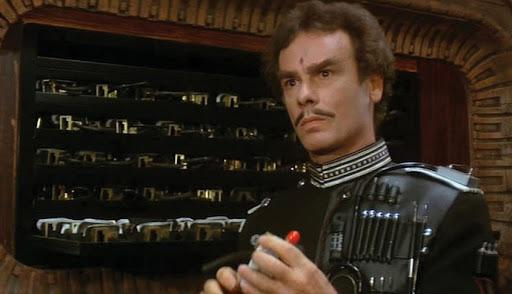
While Denis Villeneuve’s adaptation stayed true to the books, HBO’s Dune: Prophecy presented the Voice as the overpowered variation of a Jedi mind trick.
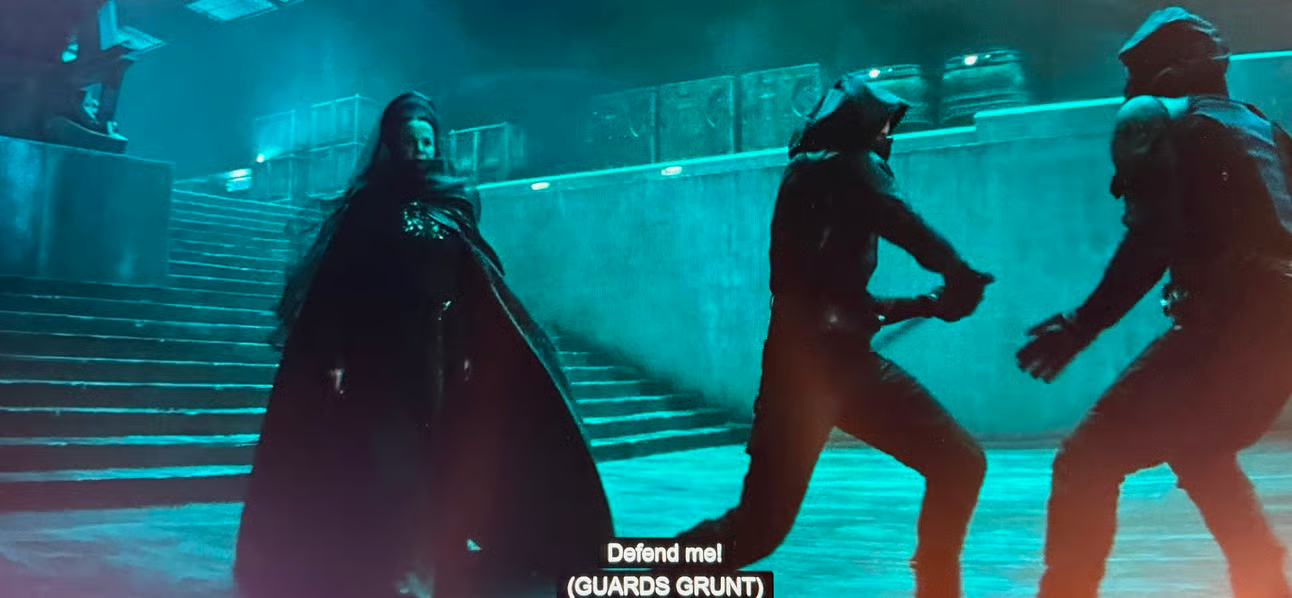
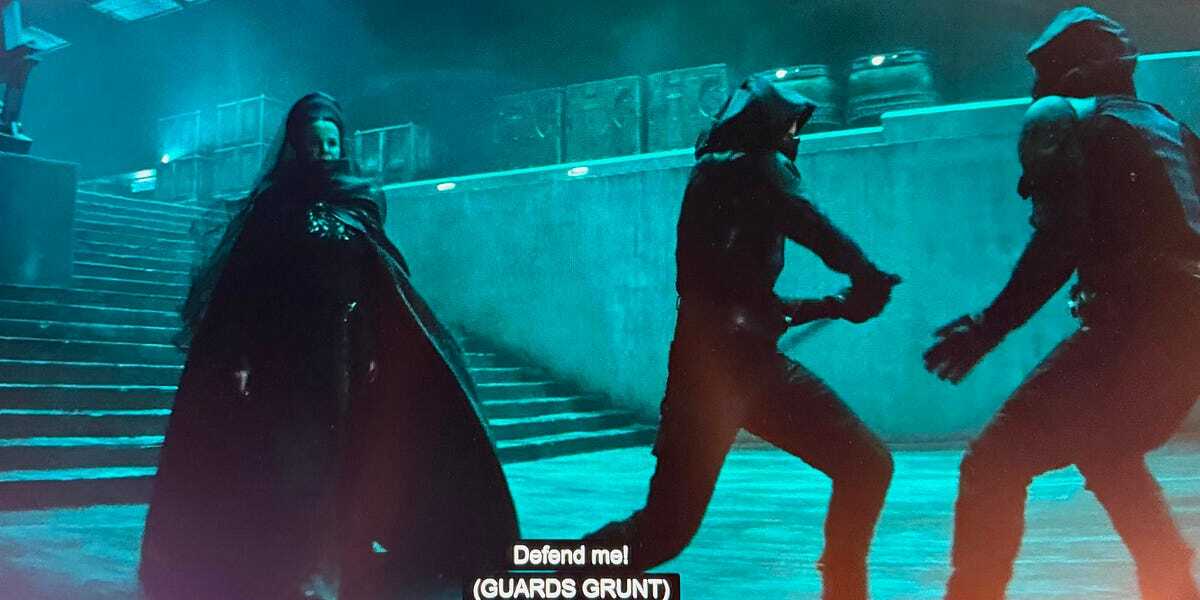
This version is a magical get-out-of-jail-free card that will constantly raise the question: Why doesn’t the Sisterhood just command its way through whatever obstacle it faces?
So let’s set the record straight about the Voice and see what the books say about:
As always, my primary focus will be on the Core Canon (i.e., the six books written by Frank Herbert) - only if we don’t find answers there will I venture out to the Expanded Universe.
VOICE: that combined training originated by the Bene Gesserit which permits an adept to control others merely by selected tone shadings of the voice.
This is the definition provided by Frank Herbert in the appendix of the original Dune.
It isn't magic or witchcraft, it's not an inherent ability that some people are born with (looking at you, Jedi), neither does it require the awareness-enhancing properties of Spice.
It's a skill that anyone can learn - with the proper training.
"What training?" you ask.
Although it's not explicitly stated, I'd posit that it's connected to the overall prana-bindu training that Bene Gesserit undergo. If you're unfamiliar, prana-bindu training results in a high degree of muscle and nerve control - and successfully using the Voice relies on such precise control of the muscles.
(Side note: this connection is also confirmed by the Dune Encyclopedia, an EU book that wasn't written by, but did have Frank Herbert's approval.)
I was very deliberate in saying that anyone can learn it - not just the girls, the boys too.
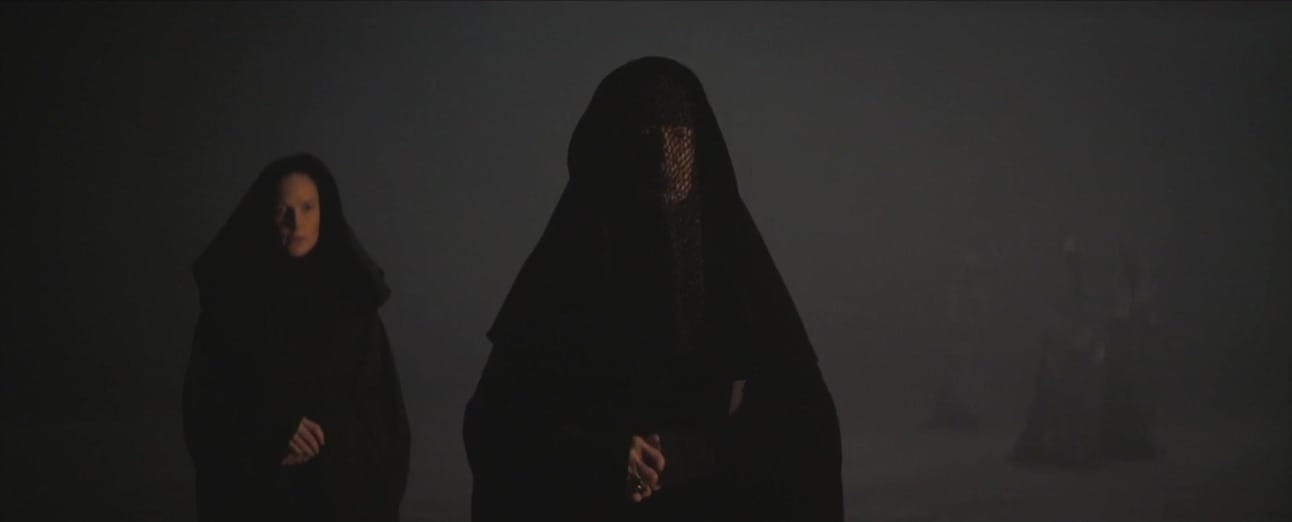
I concede that we don't have many males using the Voice, but early in the original book there's an exchange between Gaius Helen Mohaim and Lady Jessica confirming that it has nothing to do with chromosomes. It has everything to do with training in the Bene Gesserit way.
The Reverend Mother looked at Jessica. "You've been training him in the Way — I've seen the signs of it. I'd have done the same in your shoes and devil take the Rules."
Jessica nodded.
"Now, I caution you," said the old woman, "to ignore the regular order of training. His own safety requires the Voice. He already has a good start in it, but we both know how much more he needs… and that desperately."
That's how Paul Atreides learned, and that's how Miles Teg (from the fifth book) learned.
The first insight we get is when Paul and Jessica are restrained in a 'thopter, headed for what seems like certain death in the desert. Knowing about the Voice, the Harkonnens took all necessary precautions: they gagged Jessica and one of their captors is deaf.
The deaf one, Jessica thought, studying the scarred face. The Baron knows I could use the Voice on any other man.

But they never imagined Paul having extensive training. And while his first attempt wasn't perfect, it was enough.
"Remove her gag," Paul commanded.
Jessica felt the words rolling in the air. The tone, the timbre excellent — imperative, very sharp. A slightly lower pitch would have been better, but it could still fall within this man's spectrum.
The Dune Encyclopedia goes into the "scientific" details of frequencies and how inaudible sounds affect the unconscious… but what we get from this short paragraph is that the audio-neuro control mechanism depends on modulating tone, timbre, and pitch and relies on subtleties of rhythm and intonation.
And once Jessica - an adept in the Voice - is free to talk, she doesn't simply command the hearing guard to defend her. Her actions are much more nuanced.
She pitched her voice in low, intimate tones. "Gentlemen! No need to fight over me."
And once the fight is over and the deaf soldier is dead, she doesn't simply command the remaining guard to jump out of the 'thopter. That wouldn't work. Instead, she convinces him to let Paul go - who then "expands" on that opportunity.
That last bit proves that the Voice is not an absolute weapon that can do anything. There's not a single pitch-perfect way that will work on everyone - the target(s) and the intended action are all part of the equation.
Remember what Jessica thought about Paul's first attempt?
A slightly lower pitch would have been better, but it could still fall within this man's spectrum.
They got lucky that the pitch was appropriate for the target and the desired action.
(Side note: have you ever wondered why the only Force power that isn't 100% reliable is the Jedi mind trick? Never seen a Force push fail on a person, yet the mind trick only works on the weak-minded? I wonder how that came to be 😉)
Having said that, we have seen the Voice used on crowds. Paul tried it with the Fremen when he finally united the tribes and declared himself the ruler of Arrakis, and Miles Teg used Voice-like commands when he needed his soldiers to obey him.
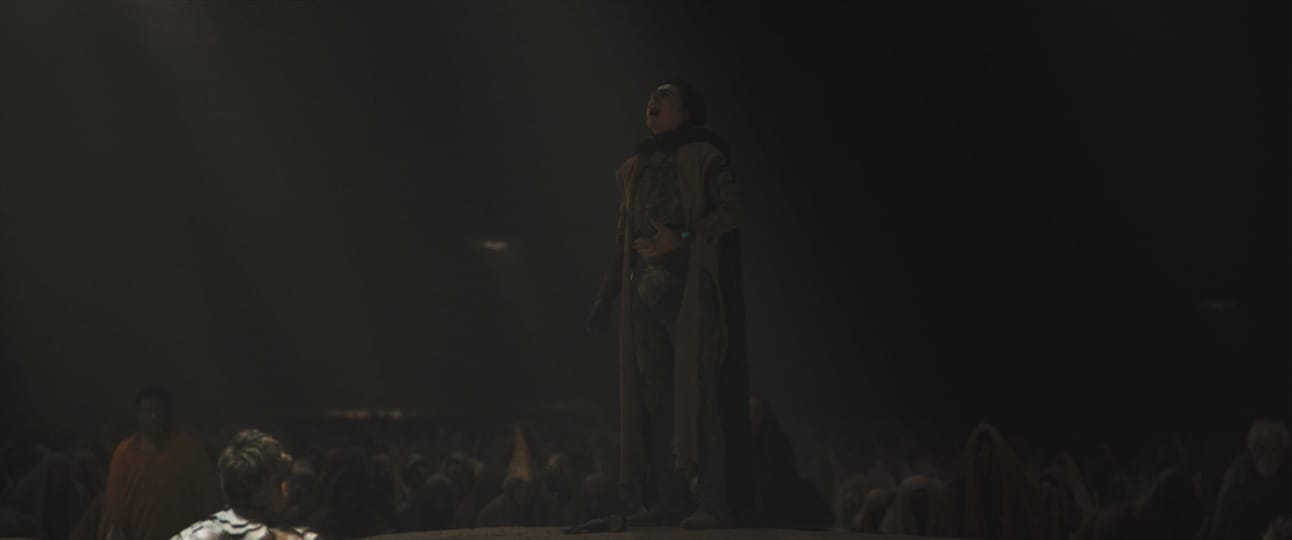
That's why the prana-bindu that enables an adept to use their voice box in such a precise manner is only one part of the required training - you also need to learn the skill of observation to understand your target's psychology.
A master of the Voice will know without fail when a command would work when a more subtle approach is required, and when it would have no effect at all.
Because of the delicate balance that is required, the Voice does not provide absolute control.
For one, you can learn to become immune to it - in the fifth book, Duncan Idaho reveals how Paul Muad'Dib taught him to resist the Voice.
It is also possible that your life experiences have made you less susceptible. Jessica didn't dare use the Voice on Gurney Halleck, for example, as she suspected it might be futile. In another scene, she also remarked that the Fremen, in general, seemed to be able to resist the Voice better than the average person.
There are also technologies that can protect you from the Voice.
Either you drop a cone of silence (which negates all sound) or you activate your personal shield (which distorts sound waves.)
The core canon, written by Frank Herbert, provides no details about the Voice's origins. We only know that the Bene Gesserit school, which focused on mental and physical training, was established after the Butlerian Jihad.
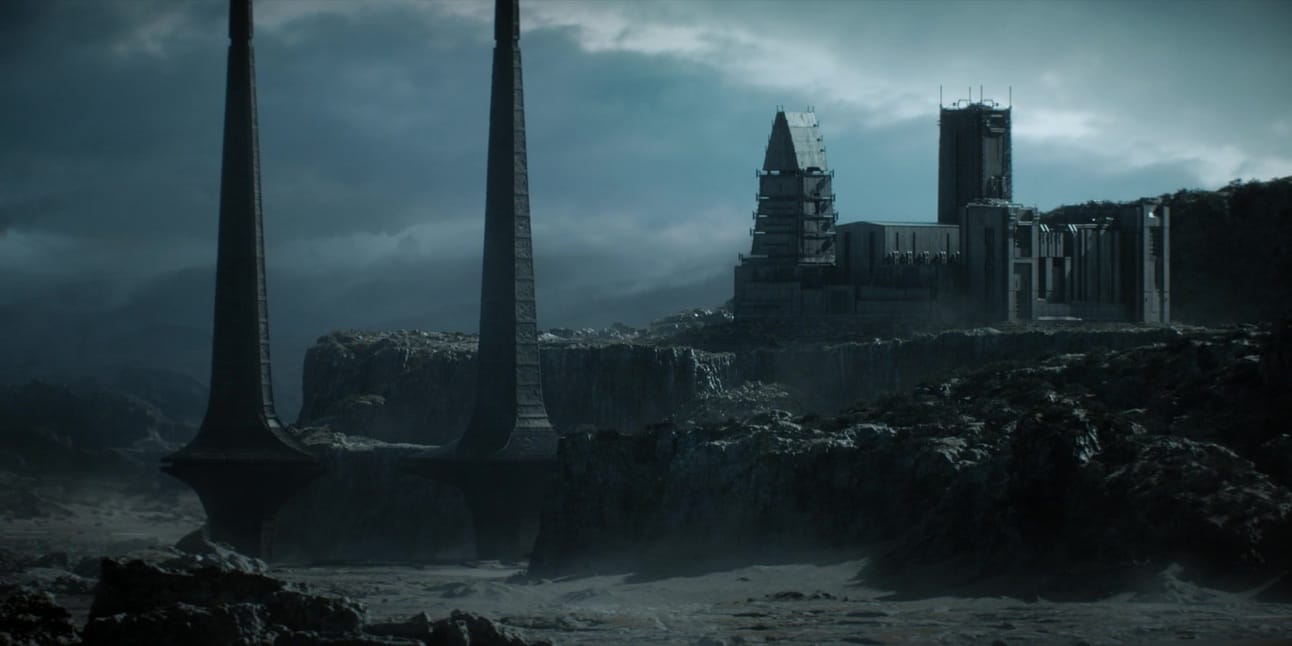
The Dune Encyclopedia provides some explanation on this topic, heavily implying that the Bene Gesserit must have relied on their Other Memory's extensive knowledge and experience to create the technique, combining the physical and psychological expertise available across the centuries.
In effect, some Reverend Mother, having hundreds and thousands of her ancestors available to her, somehow put together the pieces of the puzzle that is the Voice.
I know, it's not a very precise or scientific explanation. But. We can easily forgive this lapse, as, according to its fictitious editor, the inner workings of the Voice were only recently understood by "normal" scientific research. (For reference: in the Dune timeline, this is five thousand years after Paul's story and fifteen thousand years after Valya's.)
The prequel books, written by Brian Herbert and Kevin J. Anderson, further expand on this story. In Mentats of Dune (the second book of the Schools of Dune trilogy) they describe how Valya Harkonnen basically "intuited" her way into using the Voice once she became a Reverend Mother. (Unlike in Dune: Prophecy, where she figured it out as a young girl in a last-ditch effort to save her brother.)
The other Sisters pressed close, ready to help. Valya looked at Olivia, summoned a sense of command, and altered her voice into a lower, more throaty range. She had been observing Olivia, assessing her, learning her weak points that could be manipulated. Setting the pitch of her voice, she said, "Crawl in there and verify that the components are intact."
She had been practicing a new technique she had discovered since becoming a Reverend Mother, a way of influencing people by utilizing her voice to manipulate that person's will. Now she was pleased by how effective the command was against even a Sister Mentat. "Crawl in there." It was like an invisible push.
Olivia froze for an instant, and then, as if an unseen hand pushed her, she sprang into the tunnel opening. She seemed startled by her reflexive reaction and cried out in alarm, then recovered and proceeded into the passage, crawling along. When she saw Olivia's response, Valya felt a giddy sense of power.
She analyzed what she had done, trying to memorize the compulsion she had put into her voice. It seemed boosted by the power of Other Memory she carried within herself—she'd noticed that the throaty sound of her compelling Voice bore certain similarities to the cacophony of Other Memory she heard in her mind, a low rumble of background noise from those ancestral females. She could enhance her compulsion with nuances tailored to what she knew of Olivia. And the woman responded as expected.
Valya smiled, knowing she had to practice this further. This would bear greater study.
And practice she did. When learning to become a swordmaster on Ginaz, she defeated her instructor by temporarily paralyzing him, and - as we know from the HBO series - she indeed forced Reverend Mother Dorotea into suicide. What's more, at the height of her power, she was able to use the Voice to inflict physical injuries.
Sharpening her verbal weapons, the Mother Superior attacked her subject with vocal jabs that subdued her and turned her into a bleeding wreck on the floor. Valya had not laid a finger on the other woman, but her soft hypnotic Voice had convinced Esther-Cano that the sound was tremendously loud, rather than the whisper that it really was, and the mere suggestion of noise had actually destroyed the inside of her ears.
(I have to admit, these last two seem a bit of a stretch compared to what we know from core canon, but hey, it's called the expanded universe for a reason.)
Although Valya was the one to fully develop it as a technique and eventually started training other Sisters, we know from Sisterhood of Dune (the first book in the Schools of Dune trilogy) that she wasn't the first to use it.
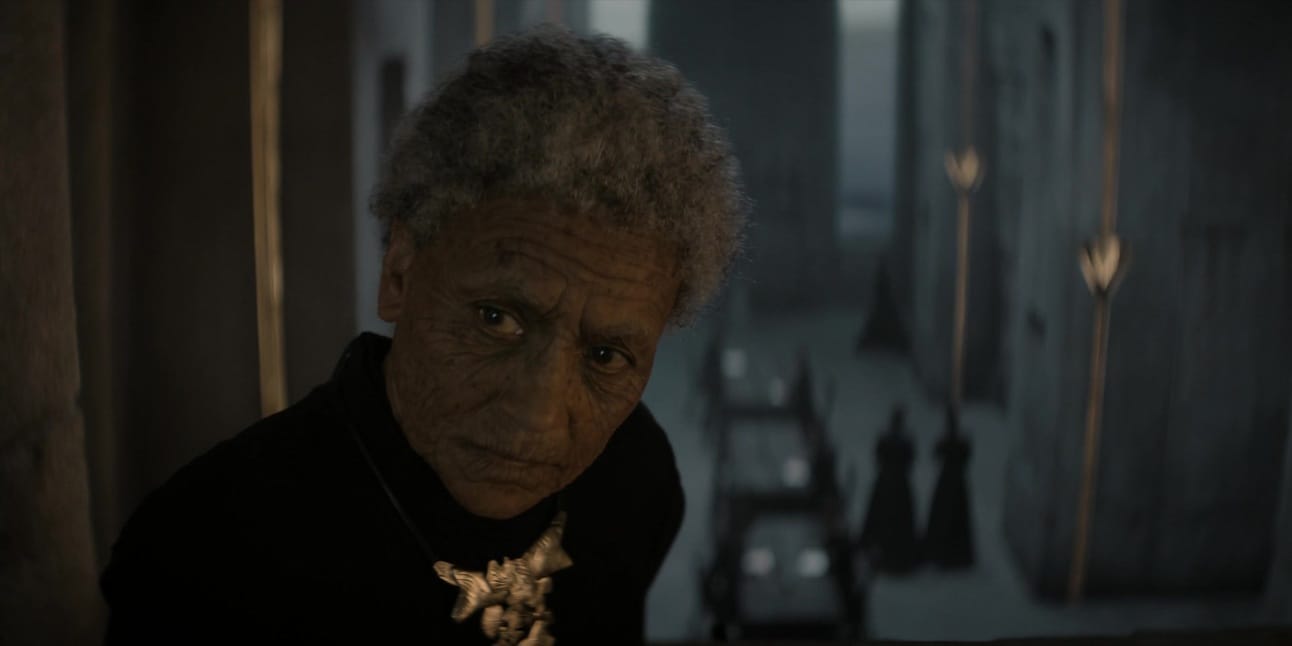
That title goes to the first Reverend Mother, Raquella Berto-Anirul, who managed to "convince" a Suk doctor to act against her patient's interests.
Employing a precise tone of voice, with all the persuasion she could muster, Raquella said, "Think of humanity as your patient, not the Emperor. According to our very accurate projections, one of his descendants will wreak havoc on such a scale that by comparison it will make every previous tyrant look like no more than a schoolboy throwing rocks. Our race, our civilization, is on the brink of disaster, and I'm offering you a way to bring us back from the edge."
Zhoma's eyes misted over and she nodded. "Yes, humanity is my patient." She steeled herself. "I will do it, because I have faith in you, Reverend Mother."
This would explain why Raquella was able to partially resist Valya's Voice in the last book of the trilogy when Dorotea was defenseless against it.
With such a potential power at their disposal, it's interesting that the Bene Gesserit don't abuse the Voice - neither as a group nor as individuals.
The books provide two main motivators for this, and the second one is very much in line with the Sisters' philosophy.
I'd consider this a personal choice. There are surely Sisters who would have concerns about this kind of manipulation - robbing someone of their free will and autonomy, compelling obedience - and would use it only when truly necessary.
In the first book, Lady Jessica elaborates on this when explaining why she didn't "make" the Duke marry her.
She sighed. "... motivating people, forcing them to your will, gives you a cynical attitude toward humanity. It degrades everything it touches. If I made him do ... this, then it would not be his doing."
Then again, it's clear that the Bene Gesserit as a whole are just that cynical.
That's where the long-term, strategic thinking of the order comes into the picture.
And again, it's the Lady Jessica delivering a succinct explanation - right after she "Voice-pushed" Thufir Hawat back into his chair.
"You've glimpsed the fist within the Bene Gesserit glove," she said. "Few glimpse it and live. And what I did was a relatively simple thing for us. You've not seen my entire arsenal. Think on that."
"Why aren't you out destroying the Duke's enemies?" he asked.
"What would you have me destroy?" she asked. "Would you have me make a weakling of our Duke, have him forever leaning on me?"
"But, with such power…."
"Power's a two-edged sword, Thufir," she said. "You think: 'How easy for her to shape a human tool to thrust into an enemy's vitals.' True, Thufir; even into your vitals. Yet, what would I accomplish? If enough of us Bene Gesserit did this, wouldn't it make all Bene Gesserit suspect? We don't want that, Thufir. We do not wish to destroy ourselves." She nodded. "We truly exist only to serve."
So while the Bene Gesserit certainly believe that the ends justify the means, they're also very conscious about choosing the best possible means for their long-term success.
I love the Voice because it perfectly represents the Bene Gesserit and what they are all about: control.
Thanks to their prana-bindu training, they have exceptional control over their own bodies, able to regulate their metabolism, resist poisons, and even choose the sex of their offspring. And as we discussed here, they can also also control someone else's actions by precisely controlling their own voice.
In a much broader sense, their aim is to control humanity. So they orchestrate generations of marriages and births, shaping bloodlines like a sculptor molds clay. They infiltrate powerful families as wives, concubines, and advisors, gaining access to key figures and influencing decisions from within. They serve as Truthsayers, but also use their ability to discern hidden motives, giving them an edge in any interaction.
What makes their pursuit for control even scarier is that their plans are not limited to a single lifetime. Thanks to Other Memory, they're allowed the luxury of relying on millennia of experience and planning ahead by centuries.

.svg.png)
.png)

If you wanna chat, find me on BlueSky.
Even if you're not a supporter (yet), you can get new articles as an email as soon as they're published - full length for free stuff and a preview of the premium content.


_00341.jpg)
_01563.jpg)